wychwayzup's pick · Updated June 2026
Cast Iron Loaf Pan with Lid 9×5 Inch
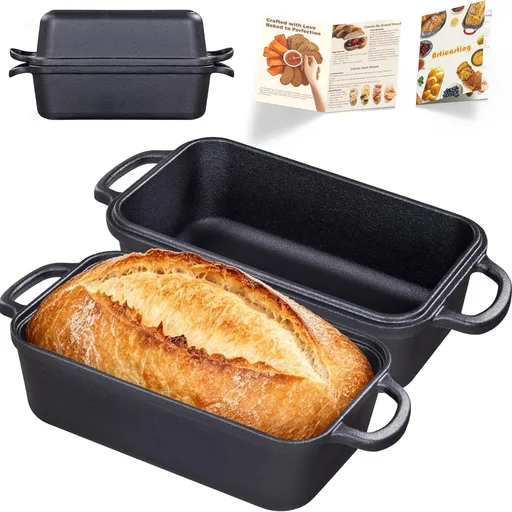
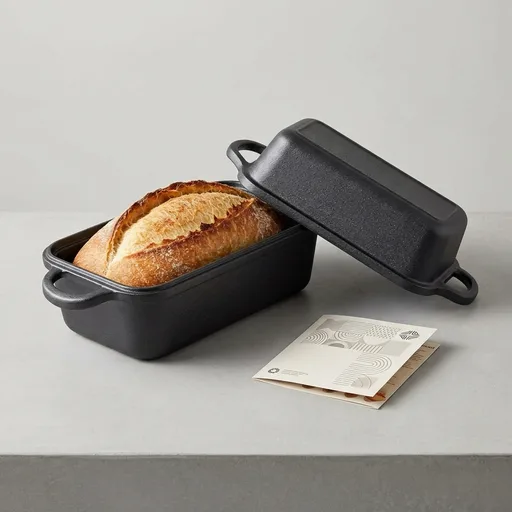
I reach for this kind of loaf pan when I want bread to bake evenly without fuss and I do not want to haul out a whole heavy oven setup. It suits someone who bakes at home, especially if you like sandwich loaves, sourdough, or the sort of plain bread that turns into toast, grilled cheese, and breakfast for a few days. The cast iron gives it a different feel from the lighter pans I am used to. It holds heat well, the lid helps trap that steady heat, and the whole thing feels made for bread that needs a good, steady bake instead of a quick one.
What I like most is how predictable a pan like this can be once you learn it. Bread browns more evenly, the sides set up nicely, and the loaf has a more finished look when it comes out. The lid is part of that. It gives the loaf a bit of a covered-bake effect, which is useful if you want a softer top at first and a better rise before the crust firms up. I also like that this is not a delicate specialty piece that feels like it has to be babied all the time. It is the sort of pan you can season, use, clean properly, and keep in regular rotation without making a ceremony out of it.
I use this for the breads that do not need fancy treatment. Sandwich loaves, enriched doughs, and the odd quick loaf when I have fruit or nuts to work in. It also makes sense if you are tired of bread sticking in cheaper pans or baking unevenly in something thin and flimsy. The weight matters here. Once the pan is hot, it stays hot, and that gives the dough a more even start in the oven. If you have ever pulled a loaf that was pale on one side and dark on the other, you know why that matters.
The one drawback is the same one I would expect from any cast iron piece. It is heavy, and the lid makes it even less graceful to move when it is hot. You are not going to want to juggle it with one hand or slide it around much once it is full. It also takes a little more care than a plain nonstick pan. You have to dry it properly and keep up with the seasoning if you want it to stay in good shape. That is not a dealbreaker, but it is the kind of thing that will bother somebody who wants to wash and forget.
I keep thinking this would be a good fit for the person who has started baking bread more often and wants something sturdier than the usual thin pan. It makes sense in a kitchen where one good pan has to do a lot of work. It is also a nice option if you like the feel of cast iron and do not mind a little extra weight for the benefit of better heat retention. In my kitchen, that tradeoff makes sense. I would rather clean one solid pan and get a loaf that behaves than keep guessing with lighter bakeware that does not hold temperature well.
There are a few practical things I would want to know before buying. The handle area is not the sort of thing you want to grab casually, and the whole pan is more awkward than a standard loaf tin when it comes to storing or moving it. It is also not the pan I would choose if I only baked once in a while and wanted something ultra light. But if bread is something you make enough to care about the bake, then this style of pan earns its place.
That is really the heart of it for me. This is for the home baker who wants a bread pan with a little more backbone, a little more heat, and a little more consistency than the thin stuff you find in a drawer full of mismatched cookware. It feels practical, not precious. I like that. And when a pan makes the bread come out looking and tasting like I meant it to, that is enough reason to keep using it.
Amazon product links on this guide are not currently affiliate links. Neither wychwayzup nor Buyer Field Guide earns an affiliate commission from them.
See current price